

![[nap_names id="FIRM-NAME-2"]](/wp-content/uploads/sites/1203779/2024/01/KF-main-horiz-logo.png)
Self-Driving Vehicle Crash Attorneys In Illinois
Driving on Illinois highways may feel routine, but traffic can change without warning. In the Chicago metro area, heavy congestion and sudden slowdowns create a serious risk. When a vehicle operates in self-driving or autopilot mode, that risk can increase if the system fails or the driver does not stay attentive.
Many newer vehicles use autonomous technology such as autopilot, autonomous mode, highway driving assist and park assist. These systems can help control speed, steering and braking. But they do not replace the driver. The person behind the wheel must stay alert and ready to take control at all times.
When drivers trust these systems too much, serious vehicle crashes can occur. If you’ve been seriously injured by a self-driving car, reach out to us for a free consultation. We can be reached at 312-724-5846 or online.
Table of Contents
Real Examples Of Self-Driving Accidents
Across the country, reports have shown how self-driving features can contribute to collisions:
- A driver using autopilot allegedly fell asleep and struck a stopped police vehicle.
- A vehicle in autonomous mode failed to detect emergency lights on the shoulder.
- Highway driving assist systems make sudden steering or braking moves in heavy traffic.
- A self-parking vehicle malfunctioned in a tight garage, causing property damage and injury.
- After a crash, damaged electronics prevented doors from unlocking, trapping occupants inside.
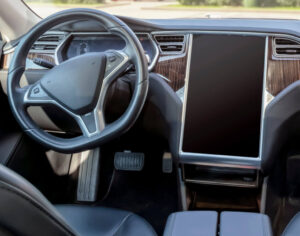
These crashes often cause severe injuries. Victims may suffer traumatic brain injuries, spinal cord damage, broken bones or internal bleeding. Medical treatment can last months or longer.
The Levels Of Autonomous Driving Technology
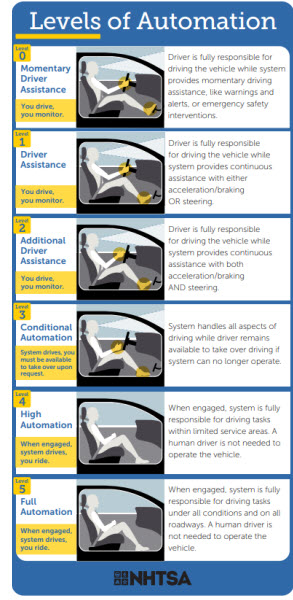
Not all self-driving systems work the same way. The automotive industry uses six levels to classify autonomous technology, from Level 0 (no automation) to Level 5 (full automation). Understanding these levels helps you know what your vehicle can and cannot do.
- Level 0 systems offer no automation. The driver controls everything, though warnings or alerts may appear.
- Level 1 systems assist with either steering or speed control, but not both at once. Adaptive cruise control is a common example.
- Level 2 systems handle both steering and speed under certain conditions. The driver must keep their hands on the wheel and eyes on the road. Tesla’s Autopilot and Full Self-Driving (Supervised) fall into this category, despite the misleading name. General Motors’ Super Cruise and Ford’s BlueCruise also operate at Level 2, though they allow hands-free driving on pre-mapped highways while requiring constant driver attention.
- Level 2+ or “hands-free” systems let drivers take their hands off the wheel on approved roads, but they must remain ready to take over immediately. These systems work on hundreds of thousands of miles of divided highways across the United States.
- Level 3 systems allow “eyes-off” driving under very specific conditions, such as heavy traffic or speeds below 40 mph. Mercedes-Benz offers Drive Pilot on select 2025 and 2026 models in California and Nevada. BMW’s Personal Pilot L3 is available on the 2025 and 2026 7-Series, though mainly in Europe. The driver can look away briefly, but the system will alert them when they need to resume control.
No privately owned vehicles in the U.S. currently operate at Level 4 or Level 5. Fully autonomous taxi services like Waymo are mapping routes in the Chicago metro area but are not yet transporting passengers here. Autonomous delivery robots also operate in some neighborhoods, creating new collision risks for pedestrians and other drivers.
Even the most advanced systems available to consumers require human oversight. When drivers misunderstand these limitations or become too reliant on the technology, crashes happen.
Who Can Be Held Responsible?
A self-driving crash may involve more than one responsible party. The driver may have misused the autopilot. The vehicle manufacturer may have designed a defective system. A software or sensor failure may have contributed to the impact. You might have wrecked because of a rogue autonomous delivery robot. At Katz, Friedman, Eisenstein, Johnson, Bareck & Bertuca, our lawyers and attorneys carefully review vehicle data, crash reports and maintenance records to determine what happened and who should be held accountable.
We have decades of experience representing injured people in complex motor vehicle cases across Illinois. We work with qualified experts to analyze how autonomous technology played a role in a collision.
Injured By An Autopiloted Vehicle? Get A Free Consultation
If you were injured in a self-driving or autopilot-related crash, contact us for a free consultation by calling us at 312-724-5846 or reaching out via email. Our attorneys represent clients in Chicago, Rockford, Springfield, Urbana and throughout Illinois. We handle cases statewide and are ready to help you protect your rights and pursue full compensation.